

Bus Simulator - Bus Games 3D
Jima Apps
Bus Simulator - Bus Games 3D is a free role-playing driving game from Jima Apps, built around the simple appeal of taking a coach bus through city routes. I approached it as a first-time player rather than expecting a detailed professional simulator, and that made its strengths easier to appreciate: it is accessible, familiar, and easy to pick up when I want a short driving session. The game is aimed at Teen players, runs on Android devices using version 6.0 or later, and has built a large audience with more than one hundred million installs and a 4.4 average from roughly two hundred forty-seven thousand ratings.
The store description emphasizes city coach driving and offline play, and that is the right way to frame the experience. This is not a story-heavy role-playing game in the traditional sense. Its role-playing angle comes from stepping into the driver’s seat, managing the feel of a bus route, and gradually becoming more comfortable with the responsibilities of moving a large vehicle through an urban setting. I found the basic idea immediately understandable, which is useful if you have never played a bus simulator before.
From installation to a first satisfying route
What to expect before you start
The first thing I would tell a new player is to keep expectations realistic. Bus Simulator - Bus Games 3D is designed to make bus driving approachable, not to reproduce every detail of a dedicated PC simulation. The appeal is the combination of a large vehicle, city roads, and the need to drive with more care than you would in a small-car game. Turning too casually, approaching a stop too quickly, or treating narrow streets like open highways can make a route feel awkward.
That learning curve is part of the charm. In many driving games, speed is the main reward. Here, I got more satisfaction from completing a route without making a messy turn or losing control of the bus. The slower pace gives the game a different rhythm, especially when I play offline and want something uncomplicated. It works well as a casual time-filler, but it can also become a small practice exercise in judging distance and planning movement.
Jima Apps keeps the concept broad enough for players who may not normally choose a simulation game. You do not need prior knowledge of real bus operations to understand what you are doing. The controls and objectives are presented through the driving experience itself, so the first session is less about studying systems and more about learning how the vehicle responds.
Related News

Why WhatsApp Messenger Still Makes Everyday Communication Feel Easy

Jurassic World: The Game Is the Better Dino Tycoon for Strategic Players

Threads in Real Life: Who Should Join, Lurk, or Leave

How SHEIN Turned Shopping Into an Endless Content Feed

How to Make Fortnite Feel Smarter on Mobile

Should You Switch to Microsoft Outlook on Mobile?
The current version is 1.7.0, and the game remains free to install. There are in-app purchases ranging from $9.99 to $119.99 per item, so I recommend deciding early whether you want to play without spending or are comfortable considering optional purchases. I personally prefer treating the free version as the complete starting point: learn the roads, understand the controls, and only then decide whether anything extra would genuinely improve your play.
Setting up the first session without overthinking it
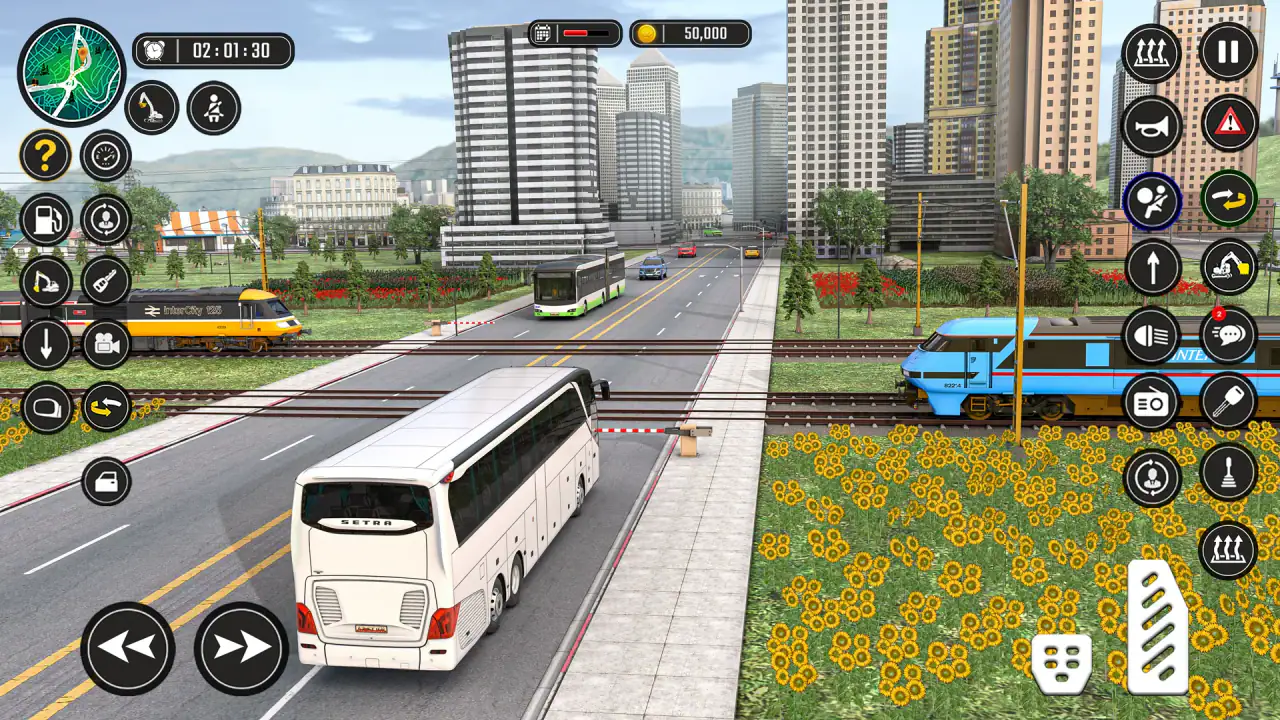
After installation, my advice is to begin with the simplest available driving option rather than searching for a perfect configuration. A first-time player can easily waste the opening minutes trying to understand every button at once. I found it more useful to identify the controls that affect steering, forward movement, braking, and camera awareness, then leave the rest alone until the bus was moving.
Use the opening drive as a calibration period. Notice how wide the bus feels when turning and how much road it needs to straighten out. A car game encourages quick corrections, but a bus rewards smoother inputs. If you steer sharply because the front of the vehicle appears to be drifting, the rear may still be following a different line. That is one of the first practical lessons in this game: watch the whole vehicle, not only the front.
Gallery
I also suggest keeping the first route deliberately calm. Do not treat the opening trip as a test of speed. Approach corners earlier than you think necessary, release acceleration before a turn, and use braking in short, controlled actions. This makes the game feel less slippery and gives you time to understand how the bus behaves in the city environment.
Camera choice matters more than a new player might expect. A view that looks attractive while stationary may not be the easiest one for tight turns. I prefer a perspective that lets me judge the bus’s sides and the road ahead, even if it feels less dramatic. When a corner is difficult, changing the viewpoint briefly can be more useful than repeatedly steering harder.
Because the game is promoted for offline driving, it suits situations where I do not want to depend on a connection, such as a commute with unreliable service or a quiet break away from home. I would still install and open it before relying on it in that situation, simply to become familiar with the controls and confirm that the version on my device behaves as expected. The important benefit is that the core idea is well suited to disconnected play rather than requiring a social session.
The first successful action is a clean, controlled turn
For me, the first meaningful success is not merely starting the bus. It is completing a turn without clipping the edge of the road or overcorrecting into another lane. That moment tells you whether the game’s driving style works for you. To reach it, slow down before the corner, begin steering while the bus is still stable, and avoid holding the steering input longer than needed.
A useful routine is to divide every turn into three stages. First, reduce speed while the bus is straight. Second, steer gradually through the corner while watching the outside edge of the vehicle. Third, unwind the steering as the road opens. This sounds basic, but it prevents the most common beginner mistake: braking heavily and turning aggressively at the same time.
When I used this approach, the city routes became less frustrating and more deliberate. I could focus on where the bus needed to be rather than reacting to every small movement. The game does not need complex instructions to teach this; the vehicle’s size creates the lesson naturally. A clean turn also gives you a repeatable goal for later sessions, which is better than judging progress only by how far you travel.
Once you can handle one turn, connect several simple actions: pull away smoothly, maintain a sensible line, slow down early, turn in stages, and regain control before accelerating. That sequence is the foundation for almost every enjoyable session. If your first attempt goes badly, I would not interpret it as a sign that the game is broken. Large vehicles are simply less forgiving, and the controls become easier after a few deliberate attempts.
Where first-time players commonly become confused
The biggest source of confusion is the difference between a bus game and a normal racing game. The objective is not always to move as quickly as possible. Speed can make the route harder because you have less time to position the vehicle. I had better results when I treated the road as a sequence of decisions instead of one continuous sprint.
Another common mistake is steering according to the front bumper alone. A bus turns with a long body behind it, so the rear can swing toward obstacles even when the front appears clear. Give yourself extra room near corners and resist the temptation to squeeze through spaces that look barely wide enough. A conservative line may feel slower, but it produces more consistent routes.
Players may also wonder why a turn feels wrong even when the steering direction seems correct. Usually the issue is timing. Starting the turn too late forces a sharp correction, while starting too early can place the bus too close to the inside edge. I recommend beginning with wider, slower turns and gradually reducing the space only after you understand the vehicle’s path.
The role-playing label can create another expectation problem. If you are looking for a character-driven adventure, dialogue, combat, or a deep narrative progression system, this is not the right kind of role-playing game. Its identity is closer to a driving role-play experience: you assume the job of a coach-bus driver and measure success through control, route completion, and improved confidence behind the wheel.
There is also a practical distinction between playing casually and chasing perfection. Casual players can enjoy a short route and stop once the driving feels satisfying. More demanding players may notice that the experience does not offer the same depth as a specialized simulator built around detailed vehicle management. I think that trade-off is fair for a mobile game with a free entry point, but it is important to know before downloading.
How I would build a reliable everyday routine
In an ordinary situation, I might open the game during a short evening break, choose an offline session, and spend the first few minutes practicing smooth starts and turns rather than trying to finish a route as quickly as possible. If I have more time, I would repeat the same style of driving while focusing on one improvement, such as braking earlier or leaving more room at intersections. This makes the game feel purposeful without turning it into homework.
A helpful habit is to use the first attempt on a route as reconnaissance. Learn where the road narrows, where a turn demands more space, and which camera view gives the clearest judgment. On the next attempt, apply only one adjustment. Changing everything at once makes it difficult to understand what helped. This small method is one of the most useful ways to turn a casual bus game into a more satisfying skill-based activity.
I would also avoid spending money during the first session. The free version is enough to decide whether the driving feel matches your preferences. If you enjoy careful vehicle handling, you already have a reason to keep playing. If you find the pace too slow or the controls too demanding, an in-app purchase will not change the basic character of the game.
The purchase range is worth keeping in mind for families and younger players. Since the content rating is Teen, parents should still discuss purchase settings and expectations before handing over a device. The game itself is easy to understand, but optional spending can turn a free download into a more expensive habit if it is not managed carefully.
What makes it useful compared with other mobile driving games
Compared with arcade racers, this game offers a calmer reason to keep driving. You are not mainly chasing opponents or trying to memorize a track for maximum speed. The bus changes the scale of every decision, so ordinary actions such as lining up for a corner or slowing before a narrow section become the central challenge.
Compared with highly detailed simulation games, it is easier to approach. A newcomer can understand the basic goal quickly and begin practicing without first learning a large collection of technical systems. That makes it a better choice for someone who wants the feeling of driving a coach bus but does not want a lengthy tutorial or a demanding management layer.
The compromise is depth. A specialist simulator may be better for players who want extensive vehicle settings, detailed operations, or a more exact recreation of professional driving. Bus Simulator - Bus Games 3D is more suitable when accessibility and quick offline play matter more than exhaustive realism. I see it as a middle ground: more deliberate than a racing game, but less intimidating than a serious simulation package.
Its large audience also suggests that the basic concept has broad appeal, with over one hundred million installs. I would not treat popularity as proof that every player will enjoy it, though. The decisive question is whether you like slow, careful driving. If you prefer immediate action, constant competition, or dramatic progression, another category may suit you better.
Who should try it, and who should skip it
I would recommend it to someone who enjoys vehicle games but wants a change from sports cars and racing tracks. It is particularly approachable for first-time bus-simulation players, casual Android gamers, and people who value the possibility of offline play. It can also work for players who enjoy repeating a familiar activity while gradually improving their control.
I would be more cautious about recommending it to a player seeking a realistic professional simulator. If your priority is exact bus operation, deep customization, or a large management system, you may outgrow this game quickly. The same applies if you dislike slow turns and careful positioning. The central pleasure comes from restraint, so impatience can make the experience feel more frustrating than fun.
Device compatibility is reasonably broad because the stated minimum is Android 6.0, but the feel of any three-dimensional driving game can vary between devices. I would close other demanding apps before playing if your phone is older, and I would give the controls a few minutes before deciding whether the performance is comfortable. A short test drive is more informative than judging the game from its store summary.
My recommendation after spending time with it
Bus Simulator - Bus Games 3D succeeds because it understands the simple fantasy at its center: taking control of a large city bus and learning to move it with care. I enjoyed it most when I stopped looking for racing-game excitement and focused on clean routes, measured turns, and the small satisfaction of improving one driving habit at a time.
The best way to start is to treat your first route as practice, not a performance test. Learn the steering response, slow down before corners, choose a camera that helps you judge the bus’s full length, and repeat a difficult section instead of rushing past it. Those steps make the opening experience much more reassuring and reveal whether the game’s pace suits you.
With a 4.4 average and a substantial player base, it is clearly not an obscure experiment, but the decision should still come down to your preferred style. I would choose it over a typical arcade racer when I want a quieter offline drive, while I would choose a more advanced simulator when I need deeper realism. For a free mobile introduction to city coach driving, it is an easy recommendation, provided you understand that its rewards come from control and patience rather than speed.
Jima Apps has kept the entry point simple enough for a first session, and that is where the game is strongest. Install it, take the first route slowly, aim for one clean turn, and decide from that experience whether you enjoy the role of the driver. If you do, the game offers a straightforward way to return to that feeling whenever you have a few minutes to spare.
FAQs for Bus Simulator - Bus Games 3D
What are the main features of Bus Simulator - Bus Games 3D?
Bus Simulator - Bus Games 3D offers an immersive driving experience with realistic graphics and dynamic weather conditions. Players can explore various routes, customize their buses, and take on challenging missions. The game also includes a detailed urban environment, diverse bus models, and user-friendly controls to enhance the simulation experience.
Is Bus Simulator - Bus Games 3D suitable for all age groups?
Bus Simulator - Bus Games 3D is designed for a broad audience, including teens and adults who are fans of simulation games. While it features realistic driving scenarios, the game is free from inappropriate content, making it suitable for younger players with parental guidance on in-app purchases.
Does the game require an internet connection to play?
Bus Simulator - Bus Games 3D can be enjoyed offline, allowing players to experience the game without an internet connection. However, certain features, such as updates or online leaderboards, may require internet access to function correctly. Playing offline ensures uninterrupted gameplay during travel or in areas with limited connectivity.
Are there any in-app purchases available in Bus Simulator - Bus Games 3D?
Yes, Bus Simulator - Bus Games 3D includes in-app purchases that offer additional content such as premium buses, customizations, and currency packs. These purchases are optional and are designed to enhance the gameplay experience. Players can choose to enjoy the game without spending money, though progress may be slower.
How often does Bus Simulator - Bus Games 3D receive updates?
The developers of Bus Simulator - Bus Games 3D frequently release updates to improve gameplay, fix bugs, and introduce new features. These updates often include new routes, bus models, and gameplay enhancements. Users are encouraged to keep the app updated to enjoy the latest content and improvements.
Pros
- Realistic driving physics enhance experience.
- Detailed 3D graphics create immersive gameplay.
- Variety of bus models to choose from.
- Multiple challenging routes to explore.
- Customizable controls for better handling.
Cons
- Occasional in-game ads can interrupt play.
- Some buses require in-app purchases.
- High storage requirement on devices.
- Minor bugs affecting smooth gameplay.
- Limited multiplayer options available.


